Weekly Photo Challenge: Letters – Take 2

While waiting for the Amtrak passenger train and a coal train to clear the tracks, enabling a clear shot of the graffiti-covered railcar featured in my first “Letters” entry, I took a picture of The Iowana. Originally built as a hotel in 1920, the tallest building in this railroad community of Creston was once a hub of activity when rail was king. Sitting vacant for a number of years, it was recently revitalized into senior adult housing with 24 units in its six floors and mezzanine level.

IMGP9654

The signage originally read “Hotel Iowana.”  In its restored version, the sign was refitted with LED lights and the “T” “H” and “E” letters were preserved from the “hotel” moniker and repositioned above the IOWANA (it’s always good to recycle if possible).

IMGP9658

Click HERE for more examples of “letters.”

Here are a few more examples of “letters” on the historic Creston Depot.

Weekly Photo Challenge: Letters

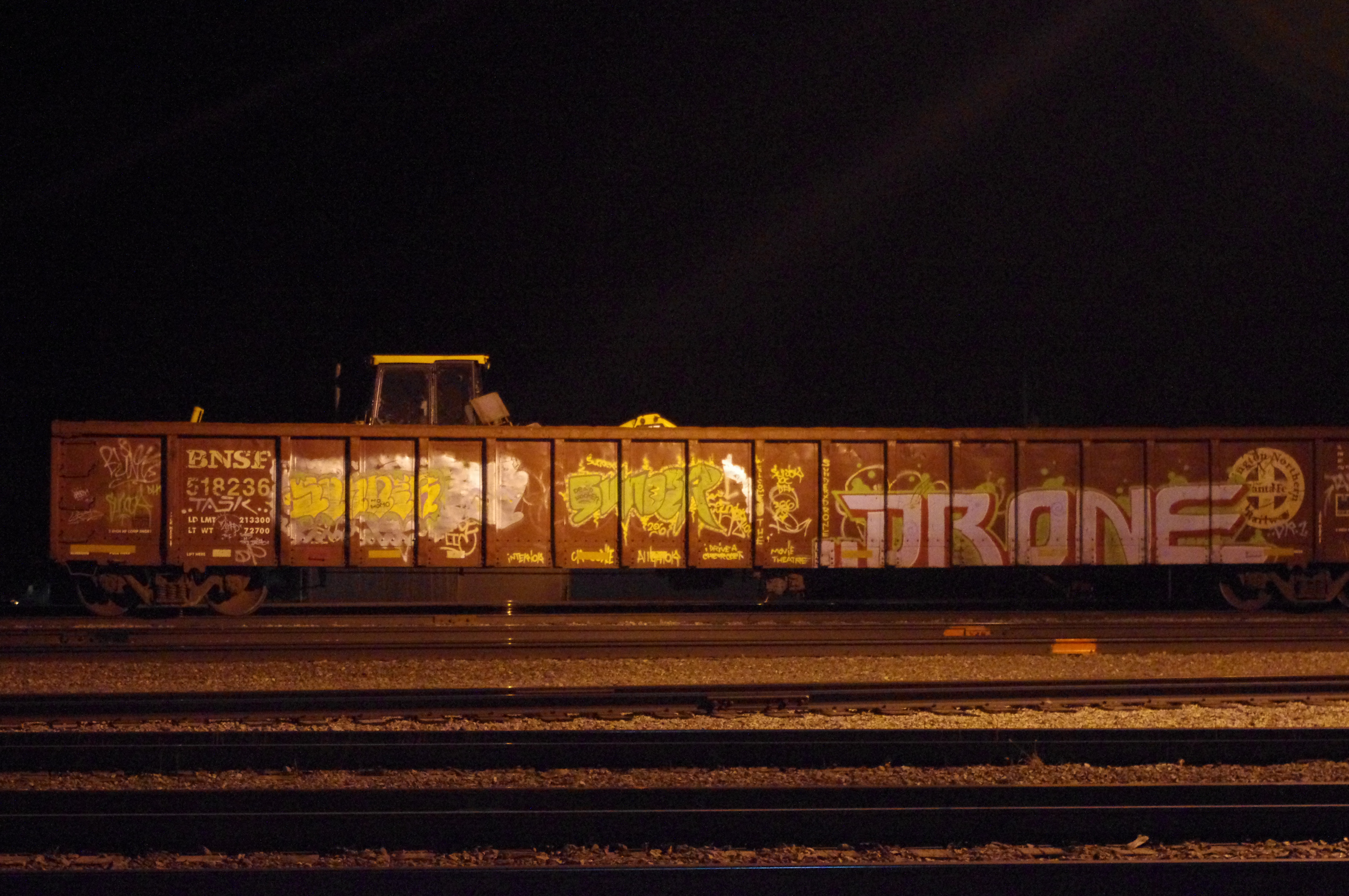
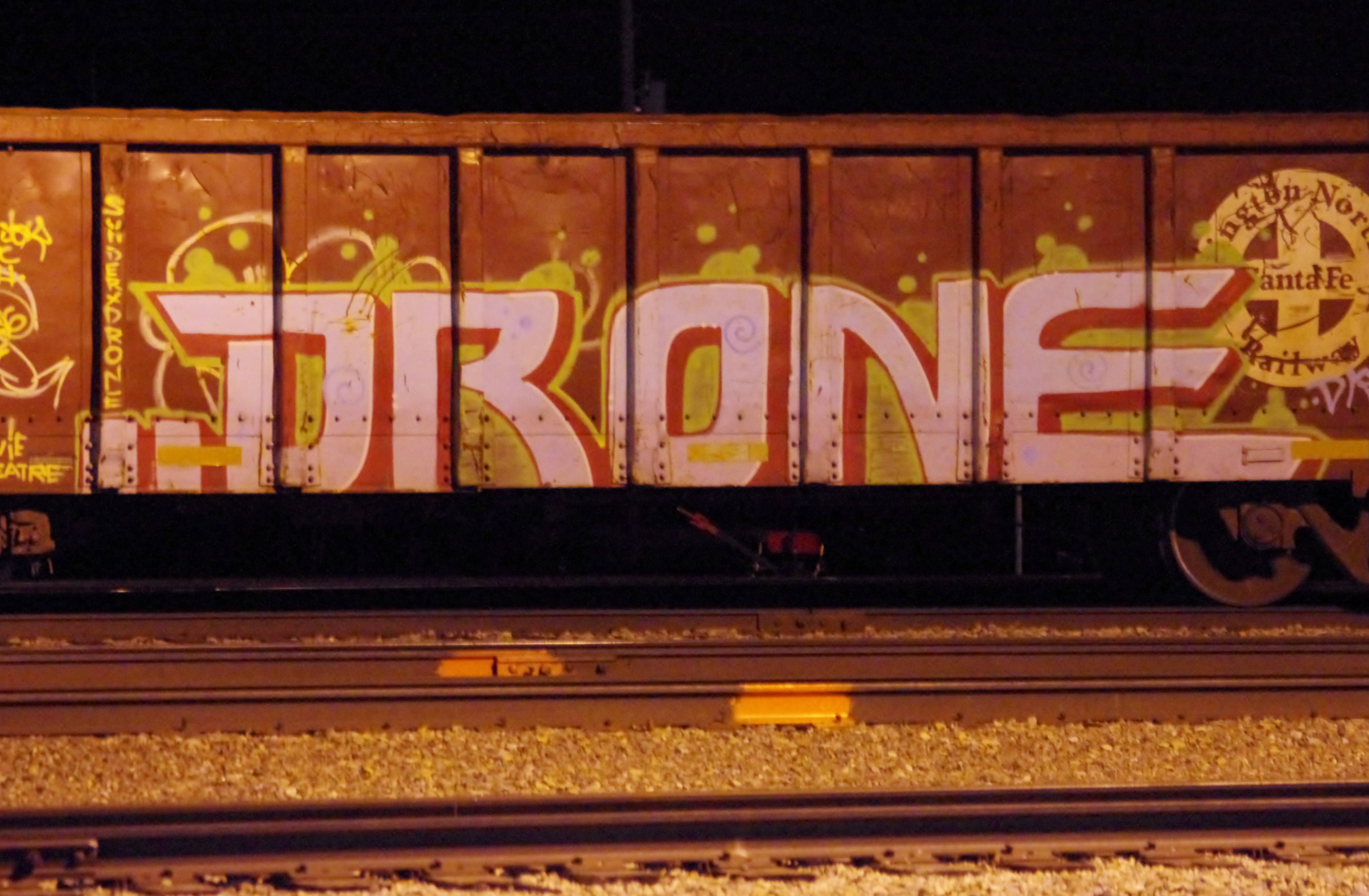
Cheri Lucas Rolands writes: For this week’s challenge, share a photo with letters…a snapshot of how we communicate with one another, even if we don’t speak the same language. For anyone who has been around trains in the U.S. for the last 40 years, graffiti is an expected appearance on freight cars. My town has a switching yard and examples of this spray painted lettering can be seen with some frequency. As I passed the yard Saturday evening, I found this example of a gondola car with the words “SUNDER DRONE” painted prominently on the side.

Graffiti-covered gondola railroad car

Graffiti-covered gondola railroad car

Joe, a member of my church, is the retired trainmaster of the Burlington Northern Santa Fe Railroad switching yard in Creston. He told me that he remembered seeing graffiti on train cars when he began working in the late 60’s. Most sources show that the availability of aerosol spray paint, reaching a production of 270 million cans annually by 1973, aided in the explosion of graffiti art. With its portability and fast drying quality, graffiti artists could quickly attack their sidetracked canvasses with multiple colors of paint cans.

Sunder - "I drive a Chevrolet."

Sunder – “I drive a Chevrolet.”

However, some of the earliest graffiti artists were hobos and rail employees. Hobos, who traveled by hitching rides on freight cars would leave symbols, a secret language, to guide fellow travelers. Their messages would warn of dangerous situations, as well as giving directions for food, water and work.

Drone

Drone

Trainmen were also responsible for some “tagging.” Joe told me of two well-known “artists.” A switchman, Herbert A. Meyer, in St. Louis, Missouri, is credited with the drawing of a man with a sombrero, enjoying a siesta under a palm tree. The name “Herby” was always followed by the date of the drawing. Another trainman known for his graffiti art was engineer, Smokin’ Joe. His locomotive drawings on boxcars featured his name “Joe” and the current number of drawings within the trailing smoke. His graffiti appeared on over 20,000 railcars.

Whatever the origins of graffiti art, it has become part of our cultural landscape.

Click HERE for more examples of “letters.”

Weekly Photo Challenge: Monument

“A place of quiet refuge, an enclosed place of thought and contemplation, separated from the city around, but near the sky and earth.”  Philip Johnson, Architect of the John Fitzgerald Kennedy Monument in Dallas, Texas.

The John F Kennedy Monument, designed by architect Philip Johnson, represents a cenotaph, or “open tomb,” to symbolize the freedom of JFK’s spirit. It is a 30 feet high and 50 by 50 feet wide roofless room, constructed with 72 white pre-cast concrete columns. Positioned within two-blocks of the Dealey Plaza and the spot of the President’s assassination, this is a must see if in Dallas, Texas.

For more examples of “monuments,” click HERE.

Weekly Photo Challenge: Reflections

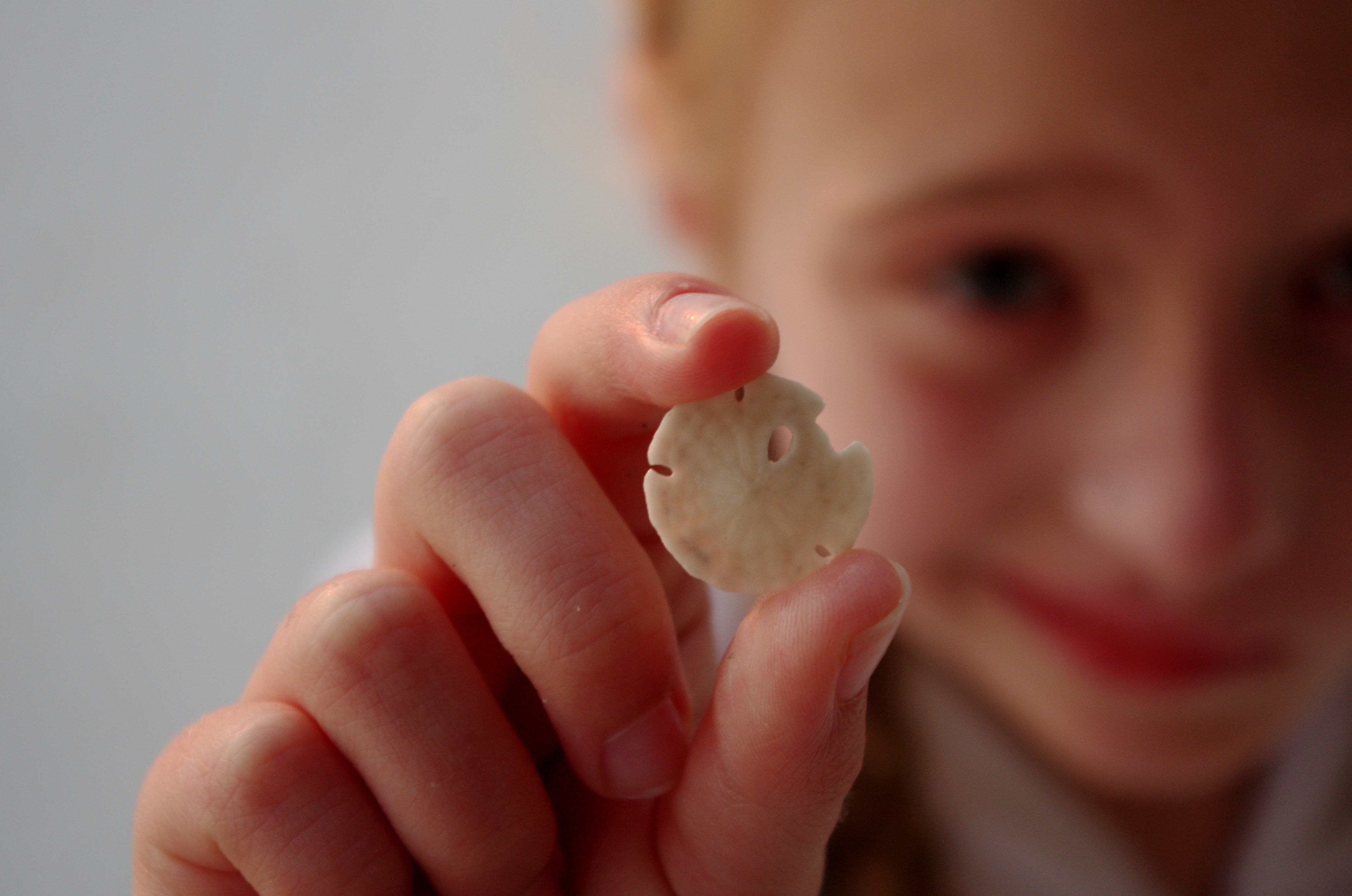
Our family time in Florida is always spent combing the beach for treasures. My sister and her granddaughter’s reflected features were captured in this shot with the late day’s sun reflection in the water.

IMGP7486

Her search was successful, finding this small sand dollar!

IMGP7507 (2)

Ben at WordPress asks: This week, in a post created specifically for this challenge, show us an image that says REFLECTION. Click HERE for more examples of “reflections.”

Weekly Photo Challenge: Inside

In honor of the first day of Spring, I’ve changed my header* and added a late entry to the “inside” challenge theme. While visiting my sister’s home in Richmond last Spring, I found her beautifully blooming azaleas were attracting Tiger Swallowtail butterflies and bumblebees. Here are just a few of the hundreds of shots I took of these insects plunging “inside” these blooms for nectar and pollen.

Josh R. suggests: Showing things relative to other things allows you to emphasize a particular subject (a ship in a bottle), show juxtaposition (a clown drinking in a bar) or abstract themes (oil in a puddle). The “inside” idea can be as wide-open as your imagination wants to make it. From the simple to the absurd, it works on almost any level. Click HERE for more “inside” entries.

* I mentioned the seasonal change of this blog’s header in The Seasons of Life.

Weekly Photo Challenge: Perspective 2

Here’s another example of “perspective”post a photo which is not what it seems to be. Make sure you share what the photo actually is of in its caption!

Garden Angel

Garden Angel

Praying for no more snow!

Praying for no more snow!

Looking forward to the scene soon!

This should be the scene in a few months!

Weekly Photo Challenge: Perspective

Ash challenged WordPress photo bloggers to post a photo which is not what it seems to be.

My wife loves making snow people. Last February, I came home to find her assembling a miniature snowmen choir, singing away (or so I thought).

Miniature Snowmen Choir?

However, when I saw the means by which she was assembling their bodies, I wondered if their expressions were instead screams of pain – spaghetti noodles through the head into the body…ouch! I never knew her sadistic side.

OUCH!!!

Click HERE for more examples of “perspective.” Below are a couple of my wife’s creations from February 2012.

Weekly Photo Challenge: Abandoned

For this week’s photo challenge, show us abandoned. You can go literal, as I have, and share a photo of ruins, a desolate place, or your idea of a wasteland. – Cheri

“Forsaken”

On a rural road, I see a homestead is falling,
At some time abandoned by some other calling.

With broken windows and peeling paint,
The farmhouse stands in silent complaint.

“Once a warm shelter, I stand now unheated
My family has left me, alone I’m defeated.

My porch on which children once played
Has fallen, in collapsed ruins it’s laid.

Curtains carefully chosen to enhance my décor
by shattered glass are ripped and lay on the floor”

“Who lived here,” I wonder, “ and when did they leave?”
The farmhouse stands, falling, alone to grieve.

Perhaps the most distressing words in the crucifixion of Christ were “My God, my God, why hast thou forsaken me?” (Matthew 37:46, KJV). This cry of anguish by the Savior, the same words of the David in Psalm 22:1, have caused theological debate over the type of abandonment Jesus suffered on the Cross. To me, John MacArthur sums it up well:

There is no way to explain it. Maybe we’re helped a little bit to understand that even in His incarnation there was a separation. Did you know that? Because in John 17:5 He says, “Father, Father, return Me to the glory I had with You before the world began.” So there was some kind of relationship that He had before his incarnation that He wanted back. So in the incarnation there was some degree of separation and now in his sin-bearing death there is another degree of separation. He is separated from God. [1]

Whatever it meant for Jesus to be forsaken, His death on the cross secured salvation for those who believe in Him and who abandon themselves to His lordship, so that mankind no longer has to feel separated and alienated from God. In Jesus’ final “marching orders” to the disciples, He promised, “I am with you always, even unto the end of the world” (Matthew 28:20, KJV), never to be abandoned again!

1. From John MacArthur’s sermon “A Closer Look at the Cross.”

Weekly Photo Challenge: Threes

This week’s challenge from Michelle W.: In a nutshell, a three-picture story is a way to help you think about storytelling with images. To create a three-picture story, gather:

  1. An establishing shot: a broad photo of your subject.
  2. A relationship: two elements interacting with one another.
  3. A detail: a close-up of one part of your subject.

The Iowa State Fair is an annual tradition for our family. Just as I arrived this year, the street performing duo of Mango and Dango with their Flying Umbrella Ship rounded the corner of Grand Avenue (the main concourse). Mango, on stilts, led the procession. When she spied me taking her picture, I saw through my lens finder that she was headed toward me. Before I knew it, her feather duster was thrust at my lens. From the video link above, you can see that others meet the same fate when filming this talented duo.

Strolling through the Fair

Click HERE for more examples of “threes.”

Weekly Photo Challenge: Treasure

Image

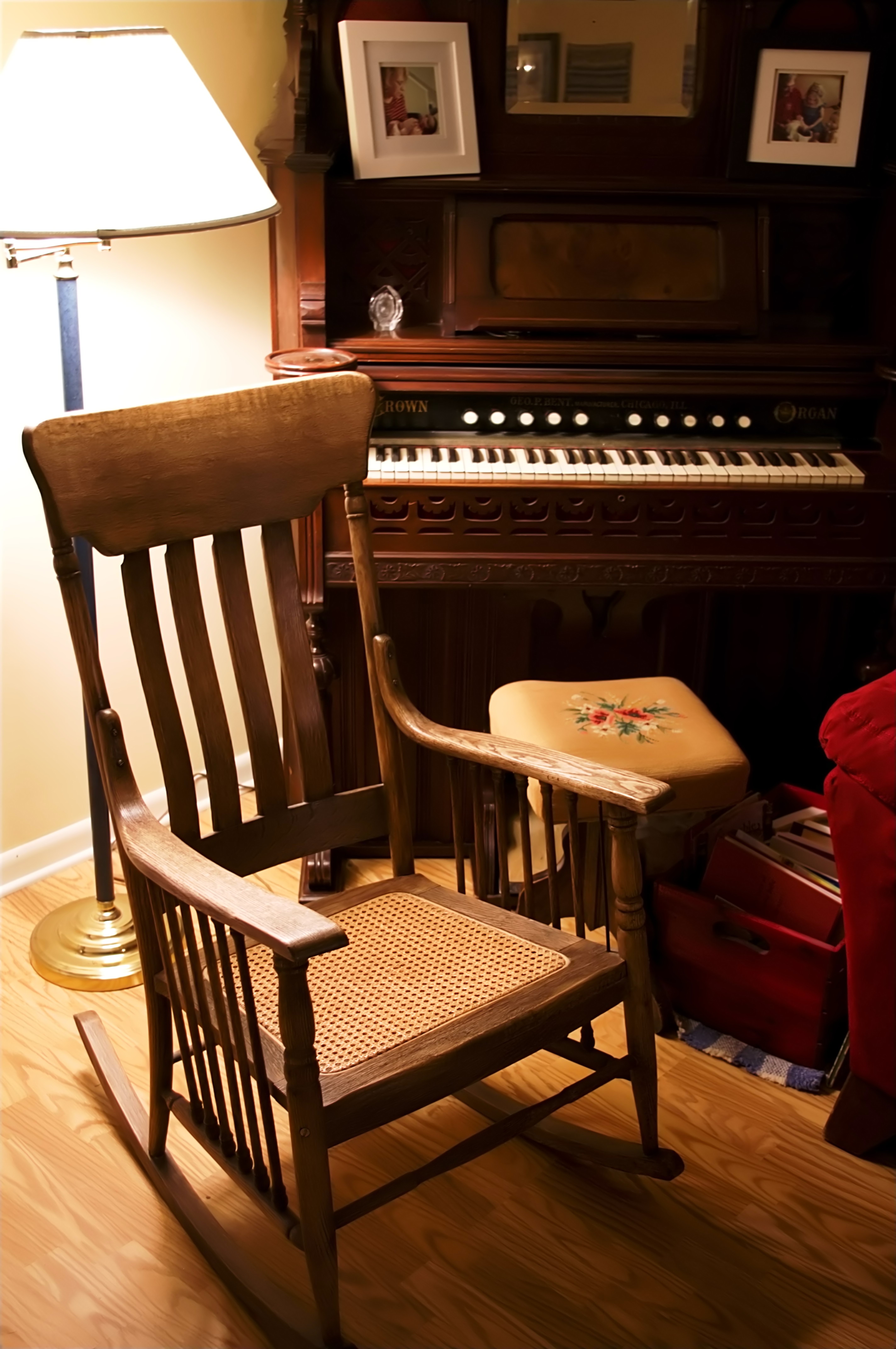
Several years ago, my parents compiled a list of family keepsakes and let us five children choose what we wanted. Many of the items were distributed as my parents  downsized over the years. Two of those items that came my way are pictured here. My great-grandmother, Mary Samuels originally possessed these treasures. She apparently bought furniture when she was displeased with her husband, and the organ was one of those purchases. As a preschooler, I remember standing on both pedals and pumping as I played some cacophony, believing it was a symphony.

Grandma Samuel's Organ and RockerThe rocker, however, is the real treasure. Also an item from Great-Grandma Samuels’ home, it sat on the front porch of my childhood home in Memphis, Tennessee with its twin. Many hours were spent rocking on the front porch with family and friends. When I bought the home from my parents, only one rocker remained, the other already having been distributed to one of my sisters. Still a sturdy rocker despite years of exposure to the elements, its green paint was cracked and revealing the previous layers of white and pink. Eventually,  I decided to refinish it, stripping the three layers of paint down to the oak grain. The cane bottom had long ago been replaced with a sheet of plywood, so I undertook the job of re-caning the seat. When I finished the transformation, I gave it back to my parents with whom it remained until last year.

Rocker Organ OverheadMy mother, now a widow, moved to our town a few years ago and decided her apartment was too crowded for the old, wooden rocker after she bought a more comfy rocker. It has come back into our possession as a special treasure, holding in its seat the memories of all the family and friends that rocked in it over the years.

While it is fun to reminisce about these special “treasures,” all earthly treasures will eventually deteriorate and cease to be, even though they may outlast several owners. Therefore, I try to hold loosely to material treasures because they are transient. But because people will be eternal, investing in others for the sake of eternity is what will last. Jesus Christ said:

19 “Do not store up for yourselves treasures on earth, where moths and vermin destroy, and where thieves break in and steal. 20 But store up for yourselves treasures in heaven, where moths and vermin do not destroy, and where thieves do not break in and steal. 21 For where your treasure is, there your heart will be also.            (Matthew 6:19-20, NIV)

There is truth in the saying, “You can’t take it with you.” So, it’s best to plant gospel seeds here and now in those who will eventually become part of the heavenly treasure of relationships that we will enjoy forever.

For more examples of “treasure” click HERE

Addendum: Here is a three generational picture with my grandfather sitting in the rocking chair. He lived with us for eight years and weather permitting, he and our dog sat on the porch every day and watched the world go by, the squirrels play and his U.S. flag fly.