Weekly Photo Challenge: Letters – Take 2

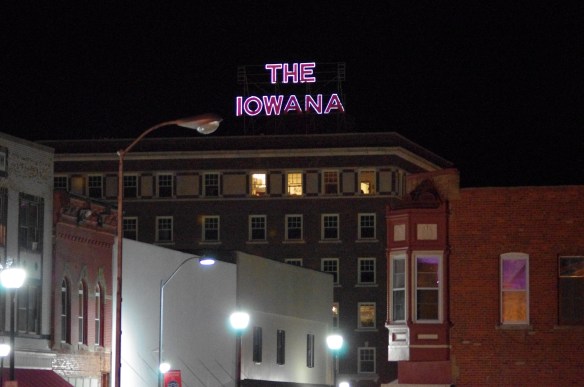
While waiting for the Amtrak passenger train and a coal train to clear the tracks, enabling a clear shot of the graffiti-covered railcar featured in my first “Letters” entry, I took a picture of The Iowana. Originally built as a hotel in 1920, the tallest building in this railroad community of Creston was once a hub of activity when rail was king. Sitting vacant for a number of years, it was recently revitalized into senior adult housing with 24 units in its six floors and mezzanine level.

IMGP9654

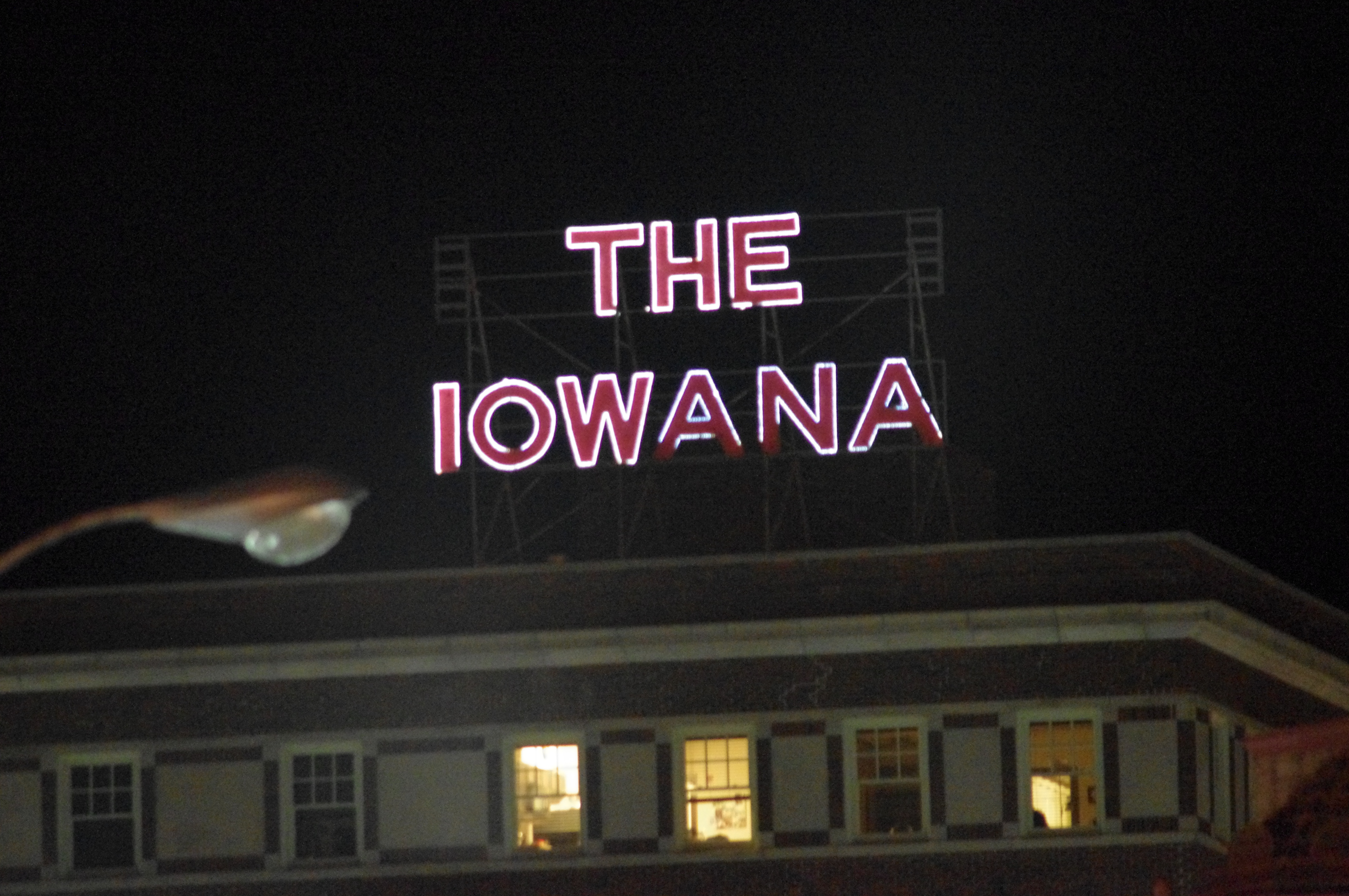
The signage originally read “Hotel Iowana.”  In its restored version, the sign was refitted with LED lights and the “T” “H” and “E” letters were preserved from the “hotel” moniker and repositioned above the IOWANA (it’s always good to recycle if possible).

IMGP9658

Click HERE for more examples of “letters.”

Here are a few more examples of “letters” on the historic Creston Depot.

Weekly Photo Challenge: Letters

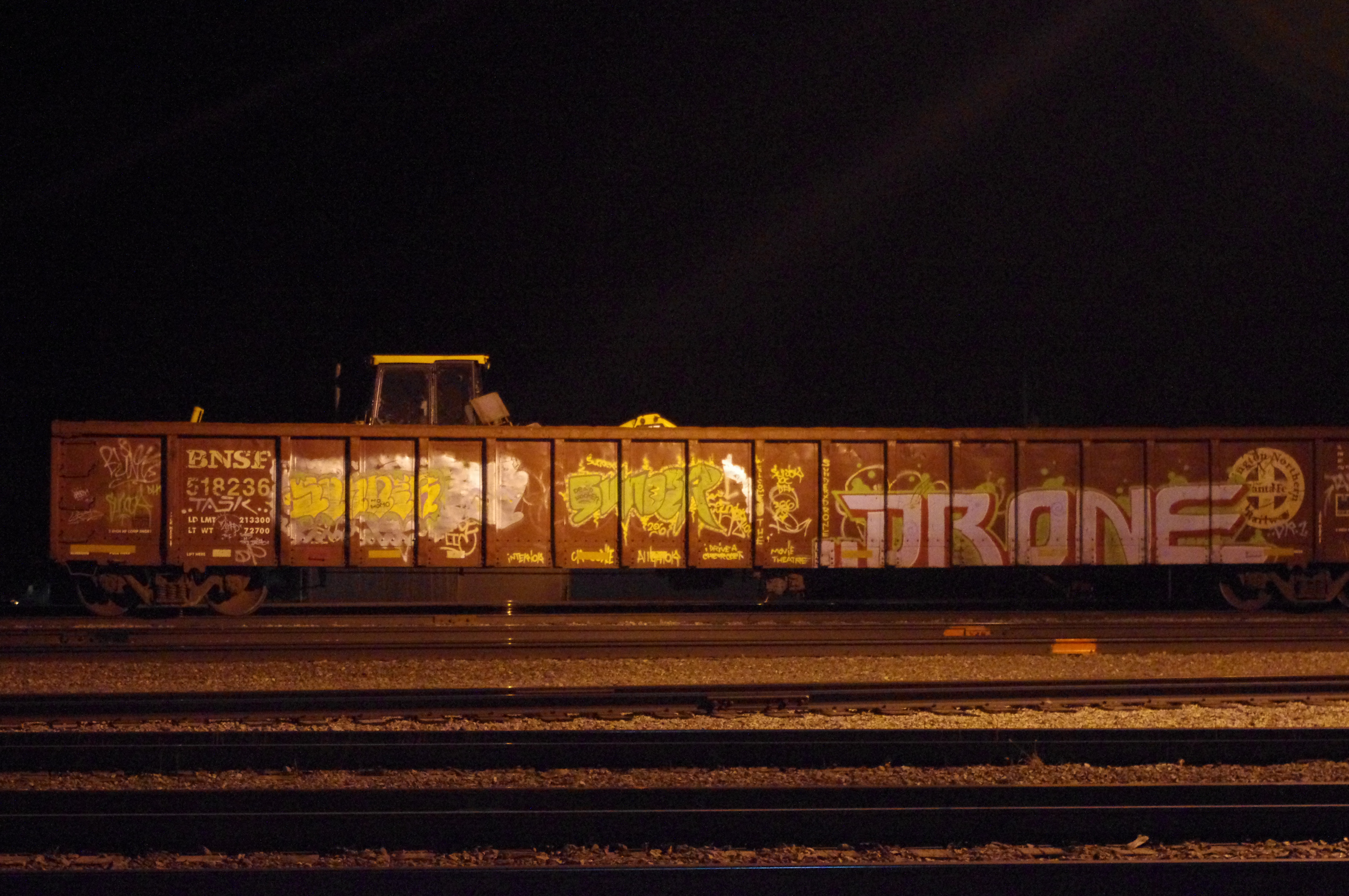
Cheri Lucas Rolands writes: For this week’s challenge, share a photo with letters…a snapshot of how we communicate with one another, even if we don’t speak the same language. For anyone who has been around trains in the U.S. for the last 40 years, graffiti is an expected appearance on freight cars. My town has a switching yard and examples of this spray painted lettering can be seen with some frequency. As I passed the yard Saturday evening, I found this example of a gondola car with the words “SUNDER DRONE” painted prominently on the side.
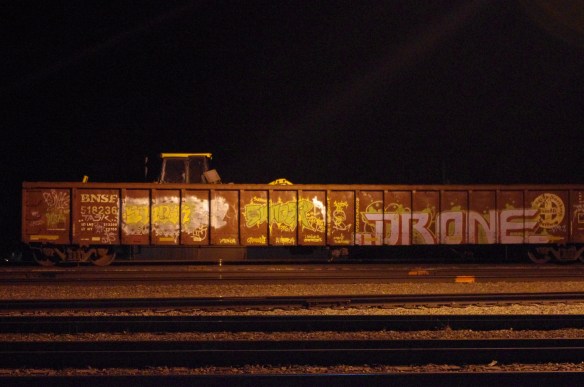
Graffiti-covered gondola railroad car

Graffiti-covered gondola railroad car

Joe, a member of my church, is the retired trainmaster of the Burlington Northern Santa Fe Railroad switching yard in Creston. He told me that he remembered seeing graffiti on train cars when he began working in the late 60’s. Most sources show that the availability of aerosol spray paint, reaching a production of 270 million cans annually by 1973, aided in the explosion of graffiti art. With its portability and fast drying quality, graffiti artists could quickly attack their sidetracked canvasses with multiple colors of paint cans.

Sunder - "I drive a Chevrolet."

Sunder – “I drive a Chevrolet.”

However, some of the earliest graffiti artists were hobos and rail employees. Hobos, who traveled by hitching rides on freight cars would leave symbols, a secret language, to guide fellow travelers. Their messages would warn of dangerous situations, as well as giving directions for food, water and work.

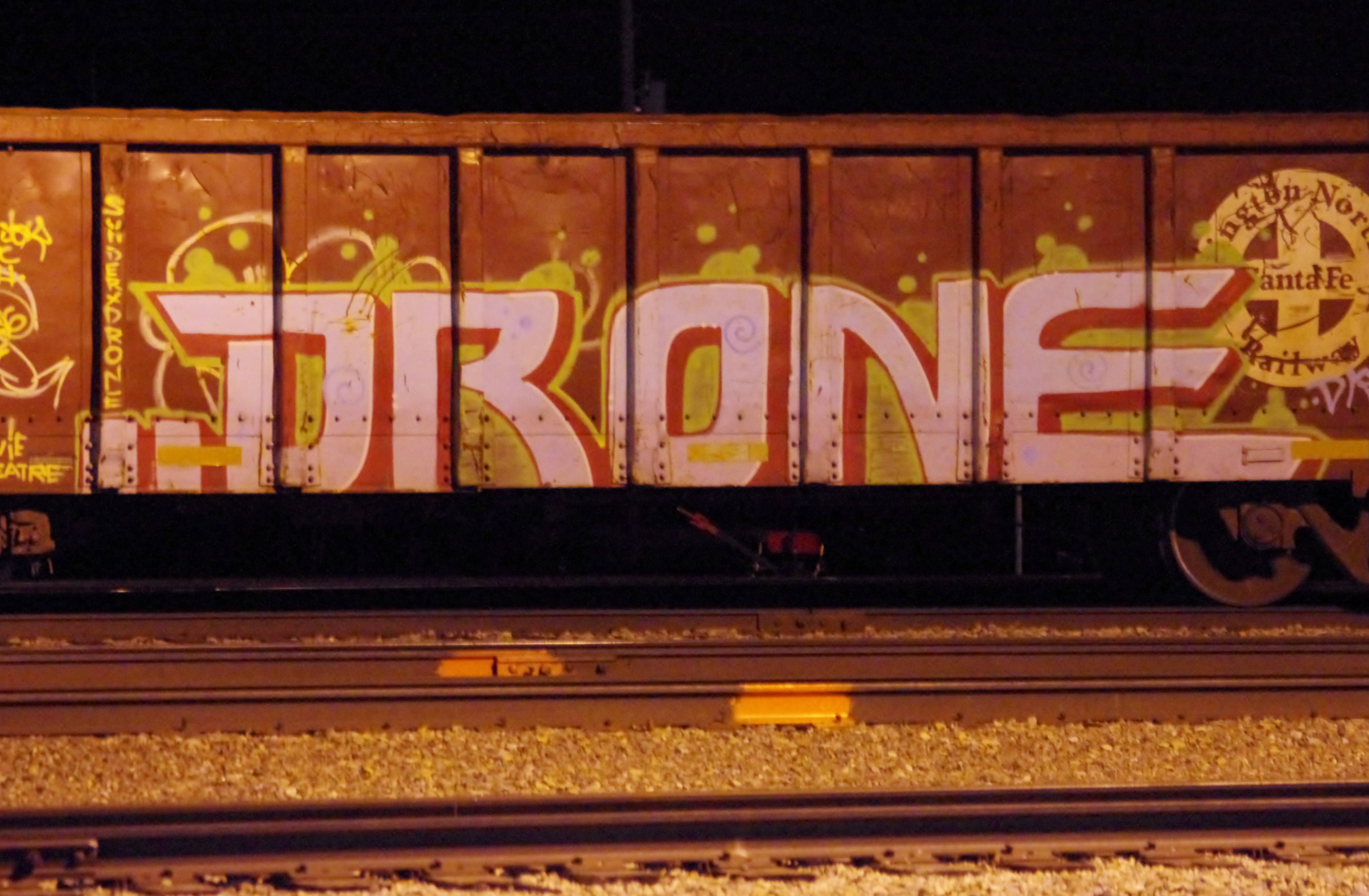
Drone

Drone

Trainmen were also responsible for some “tagging.” Joe told me of two well-known “artists.” A switchman, Herbert A. Meyer, in St. Louis, Missouri, is credited with the drawing of a man with a sombrero, enjoying a siesta under a palm tree. The name “Herby” was always followed by the date of the drawing. Another trainman known for his graffiti art was engineer, Smokin’ Joe. His locomotive drawings on boxcars featured his name “Joe” and the current number of drawings within the trailing smoke. His graffiti appeared on over 20,000 railcars.

Whatever the origins of graffiti art, it has become part of our cultural landscape.

Click HERE for more examples of “letters.”

Weekly Photo Challenge: On Top

Sara Rosso challenges: “In a post created specifically for this challenge, share a photo that means On Top!”

In fulfilling last’s week’s challenge of “Monument,” my object (the JFK Monument in Dallas, Texas) was near a fascinating object “on top.” From my vantage at the Kennedy Memorial Plaza, I took the pictures of the old Dallas Court House with only the Clock Tower visible over the trees that grow to its east. Now called the Old Red Museum, this renovated building houses local historical artifacts.

Built in 1892 of red sandstone rusticated marble accents, the courthouse was replaced in 1966. Apparently, the original clock tower was an after thought and not a part of the original blueprints. As a result of that poor planning, there were ultimately compromises in structural integrity, and the original clock tower was removed 1919. However, renovations to “Old Red” in the 2000’s enabled the tower to be restored. In my opinion, clock/bell towers are the proper caps “on top” of old courthouses.

For more examples of “on top,” click HERE.

This Youtube video takes a peek inside the clock tower and includes the bell ringing at the four o’clock hour (2:55).

Weekly Photo Challenge: Monument

“A place of quiet refuge, an enclosed place of thought and contemplation, separated from the city around, but near the sky and earth.”  Philip Johnson, Architect of the John Fitzgerald Kennedy Monument in Dallas, Texas.

The John F Kennedy Monument, designed by architect Philip Johnson, represents a cenotaph, or “open tomb,” to symbolize the freedom of JFK’s spirit. It is a 30 feet high and 50 by 50 feet wide roofless room, constructed with 72 white pre-cast concrete columns. Positioned within two-blocks of the Dealey Plaza and the spot of the President’s assassination, this is a must see if in Dallas, Texas.

For more examples of “monuments,” click HERE.